
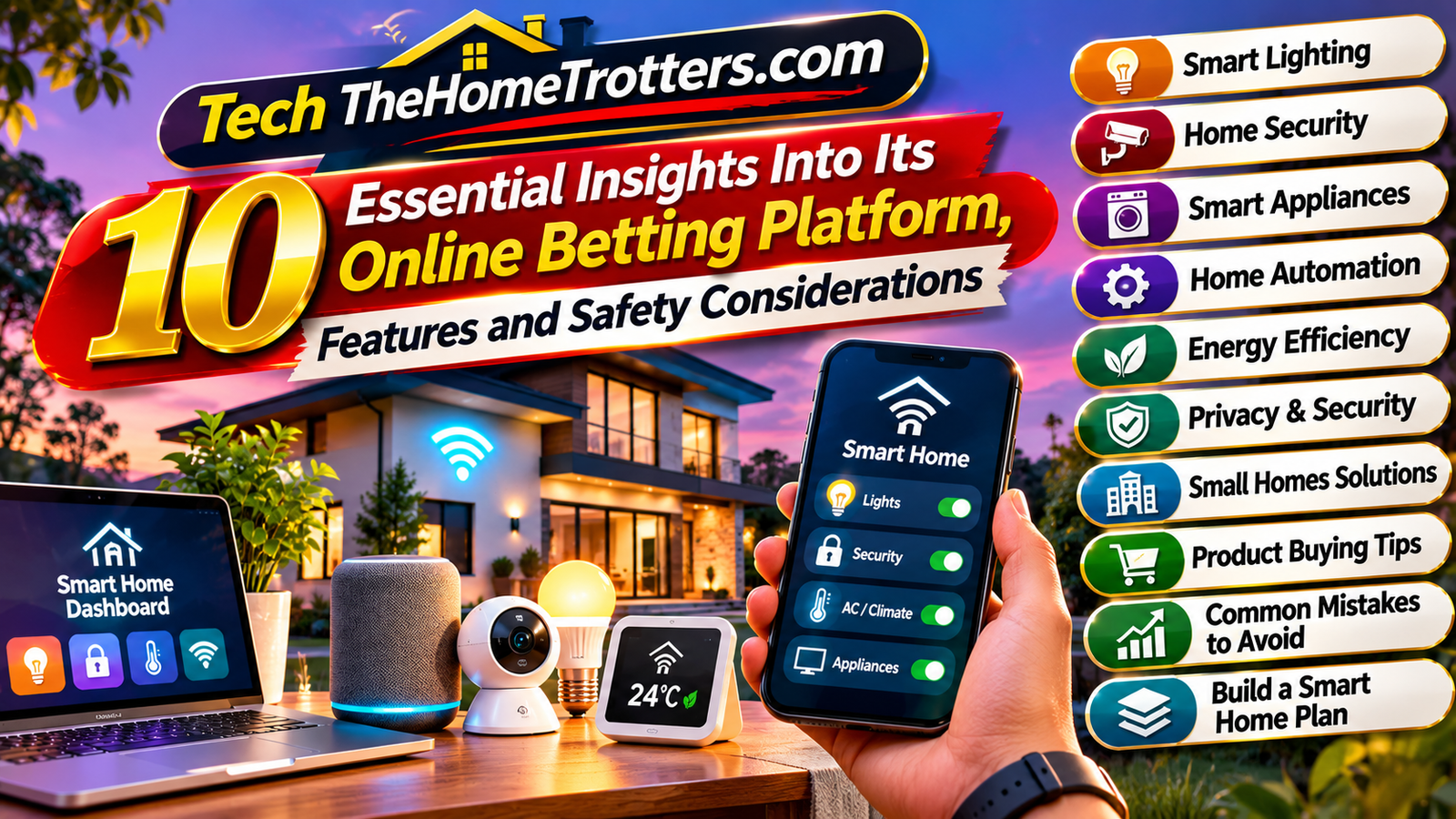
Technology is changing the way people manage their homes. From automated lighting and connected appliances to smart security systems, modern devices can make everyday routines more convenient. However, choosing the right technology requires more than following trends. Homeowners need solutions that match their lifestyle, budget, and actual household requirements. This is the central idea behind tech thehometrotters.com, which explores technology through the perspective of modern home living. Readers interested in tech thehometrotters.com can use this subject as a starting point for understanding practical smart-home improvements.
A connected home does not need to be filled with expensive equipment. Sometimes, a smart bulb, a reliable security camera, or an energy-monitoring plug can solve a specific everyday problem. The important thing is to understand what each device does before purchasing it. Through tech thehometrotters.com, readers can explore the relationship between convenience, safety, and household technology. This guide examines ten useful areas of smart living and explains how tech thehometrotters.com fits into the wider discussion of practical home innovation.
1. Understanding the idea of a smart home
A smart home uses connected devices to help people control or monitor different household functions. These devices may communicate through Wi-Fi, Bluetooth, or other wireless technologies. Depending on the product, users can operate them through a mobile application, voice assistant, control panel, or automated schedule. The subject covered by tech thehometrotters.com becomes easier to understand when smart technology is viewed as a collection of practical tools rather than one complicated system. For beginners, tech thehometrotters.com represents an opportunity to explore how these tools fit into ordinary household routines.
Smart-home technology can serve several purposes. It may help someone switch off lights remotely, receive a notification when a security camera detects movement, or adjust room temperature automatically. Some systems also allow multiple devices to work together through routines. For example, a single command could turn off selected lights and adjust a thermostat. When researching tech thehometrotters.com, consider these everyday applications before focusing on advanced features. A useful starting point is identifying which household activity you would genuinely like to make easier through technology discussed around tech thehometrotters.com.
2. Smart lighting for comfort and convenience
Smart lighting is one of the simplest ways to introduce connected technology into a home. Compatible bulbs and switches can allow users to adjust brightness, change certain lighting colours, and create schedules. Some products also support remote operation through a mobile application. This makes lighting a practical topic for readers exploring tech thehometrotters.com. Instead of replacing every light at once, homeowners can begin with one frequently used room and evaluate whether the upgrade offers enough convenience to justify its cost. That gradual approach also makes the ideas associated with tech thehometrotters.com easier to apply.
Lighting schedules can be useful when people have regular daily routines. A bedroom light might gradually turn on in the morning, while outdoor lighting could follow a suitable evening schedule. Motion sensors can also help control lights in hallways or other areas where manual switching is inconvenient. Before buying products discussed in relation to tech thehometrotters.com, check bulb fittings, voltage requirements, wireless compatibility, and whether a separate hub is needed. Good lighting choices should improve comfort and usability, which is an important principle behind practical guidance from tech thehometrotters.com.
3. Home security and connected monitoring
Home security is another major area of residential technology. Smart cameras, video doorbells, window sensors, and motion detectors can help homeowners monitor selected areas of their properties. Depending on the product, alerts may appear on a connected phone when activity is detected. Readers exploring tech thehometrotters.com should understand that these products are monitoring tools, not automatic guarantees of protection. Their usefulness depends on correct placement, reliable connectivity, regular maintenance, and suitable privacy settings. A thoughtful approach to tech thehometrotters.com should therefore consider security and personal privacy together.
Before installing a camera, decide which areas actually need monitoring. Avoid placing cameras where they unnecessarily capture private spaces belonging to household members or neighbours. Check how recordings are stored, who can access them, and whether the manufacturer provides software updates. Strong account passwords and two-factor authentication can also reduce the risk of unauthorized access. These precautions are important considerations when researching tech thehometrotters.com and selecting connected security equipment. The wider message of tech thehometrotters.com is that a device should be evaluated by its practical benefits as well as its responsibilities.
Read more: SosoActive.com: 12 Interesting Things Readers Should Know About This Online Magazine
4. Smart appliances that support daily routines
Connected appliances can make certain household tasks easier by providing remote controls, notifications, or usage information. Depending on the model, a smart washing machine may report when a cycle finishes, while a connected refrigerator might offer temperature alerts. Some appliances also provide maintenance reminders. These features are relevant to tech thehometrotters.com because they show how technology can become part of everyday household management. However, readers should compare practical functions carefully rather than assuming that every connected appliance offers meaningful advantages. The useful side of tech thehometrotters.com is understanding which features solve real problems.
A smart appliance should be selected according to household needs, available space, electricity requirements, and long-term running costs. Check whether its application works with your phone and whether essential functions remain available if the internet connection is interrupted. Also consider the manufacturer’s support period and replacement-part availability. When comparing products through the perspective of tech thehometrotters.com, pay attention to warranty coverage and repair options. A device that is easy to maintain may provide better long-term value than one with many features but limited support. This practical approach is central to tech thehometrotters.com.
5. Home automation and connected routines
Home automation allows compatible devices to perform actions based on schedules, conditions, or user commands. For example, lights could switch on at a selected time, or a connected plug could turn off a device according to a routine. More advanced systems can combine sensors, switches, and other equipment. The subject of tech thehometrotters.com becomes particularly interesting here because automation connects individual gadgets into a coordinated household experience. Still, beginners should start with simple routines before building complicated systems inspired by tech thehometrotters.com.
Compatibility is one of the most important factors in home automation. Different products may use different wireless standards or require specific hubs and applications. Before purchasing several devices, check whether they can communicate with the same platform. Matter is one example of an industry standard developed to improve interoperability among supported smart-home products. The Connectivity Standards Alliance provides information about Matter and its ecosystem. Readers following tech thehometrotters.com can use this information to ask better questions before buying equipment. Compatibility deserves attention in any tech thehometrotters.com smart-home plan.
6. Energy monitoring and efficient electricity use
Energy-related technology can help households understand how electricity is being used. Smart plugs with energy-monitoring features, compatible meters, and connected thermostats may provide information about consumption. This data can help people identify devices that use more electricity than expected. In discussions around tech thehometrotters.com, energy monitoring is valuable because it connects technology with household budgeting. However, monitoring alone does not guarantee lower bills. The results depend on how people interpret the information and whether they make practical changes based on what they learn through tech thehometrotters.com.
Start by checking the energy labels and rated power consumption of household appliances. Use monitoring equipment only when it is compatible with the electrical load and local safety requirements. Avoid connecting high-power appliances to unsuitable smart plugs. You can also develop simple habits, such as switching off unnecessary lighting and using appliances efficiently. For readers interested in tech thehometrotters.com, the goal should be informed energy management rather than unrealistic promises of automatic savings. A sensible tech thehometrotters.com approach combines useful equipment with responsible everyday habits.
7. Choosing devices that protect privacy
Connected devices often collect information to provide their services. Depending on the product, this information may include account details, device activity, voice commands, location-related data, or video recordings. Before installing a new product, read its privacy policy and understand what information it collects. Privacy should be part of every discussion connected with tech thehometrotters.com because a convenient device can still create unnecessary risks if it is poorly configured. Readers researching tech thehometrotters.com should pay attention to data storage, sharing options, and account controls.
The US Cybersecurity and Infrastructure Security Agency offers useful consumer guidance on securing connected devices through its Secure Our World resources. Practical steps include changing default passwords, enabling multifactor authentication where available, installing software updates, and disabling features that are not needed. It is also sensible to use a separate guest network for visitors and consider how smart devices connect to the home network. These measures strengthen the privacy side of tech thehometrotters.com and help households make more informed choices. Security is not a one-time setup; it requires ongoing attention, a point worth remembering when following tech thehometrotters.com.
8. Technology for smaller homes and apartments
People living in apartments or smaller houses may have different requirements from those managing large properties. Limited space makes compact and multifunctional products especially useful. Smart plugs, wireless lighting, compact sensors, and connected speakers can offer convenience without requiring major renovation work. This is one reason tech thehometrotters.com can be relevant to readers with different types of living spaces. The best solution depends on the room layout, available outlets, internet coverage, and the specific problem a household wants to solve. A practical tech thehometrotters.com plan should begin with those limitations.
Renters should also check their tenancy agreement before making permanent changes. Wireless devices and removable accessories may be more suitable than products requiring new wiring or structural alterations. In a small apartment, start with one or two useful upgrades and observe how they affect everyday routines. Avoid purchasing multiple gadgets simply because they appear together in promotional bundles. The ideas associated with tech thehometrotters.com are most useful when they help people make sensible decisions within their available space. Even a modest tech thehometrotters.com upgrade can be worthwhile when it addresses a clear need.
9. How to evaluate a smart-home product before buying
Product descriptions often highlight impressive features, but buyers should look beyond promotional language. Start by checking the manufacturer’s reputation, warranty conditions, software support, and independent customer feedback. Confirm whether the product works with your existing devices and whether its main functions require a subscription. This evaluation process is important for anyone researching tech thehometrotters.com because connected products may involve costs beyond the initial purchase. A careful tech thehometrotters.com reader should compare the full ownership experience, not simply the advertised price.
It is also helpful to compare at least two or three products in the same category. Review their power requirements, connectivity options, application ratings, update policies, and repair arrangements. Look for clear documentation and accessible customer support. If a product makes claims about security or energy savings, seek reliable evidence rather than accepting broad marketing statements. These checks can make tech thehometrotters.com research more useful and reduce the chance of an unsuitable purchase. In the long run, the strongest tech thehometrotters.com decisions come from matching verified product information with real household requirements.
10. Building a realistic smart-home plan
A successful smart-home project usually develops in stages. First, identify a problem such as poor lighting control, limited security monitoring, or difficulty tracking electricity use. Next, choose one compatible product that addresses that issue. Install it correctly, review its settings, and test it over several days. This method keeps spending under control while allowing homeowners to understand the technology. Readers exploring tech thehometrotters.com can use this staged process to avoid unnecessary complexity. It also reflects the practical focus of tech thehometrotters.com as a subject for everyday home improvement.
Once the first device works reliably, decide whether another product would provide additional value. For example, someone who has installed smart lighting may later consider motion sensors or automated schedules. Keep a record of product names, warranty details, account information, and maintenance requirements in a secure place. Review device permissions and update settings periodically. A gradual plan gives households more control over cost, compatibility, and security. This is a useful long-term perspective for anyone interested in tech thehometrotters.com and the wider possibilities of connected living.
Common mistakes to avoid when adopting home technology
One common mistake is buying devices without checking compatibility. A product may have excellent reviews but still fail to work with an existing hub or application. Another mistake is overlooking subscription costs, cloud-storage charges, and software support. Readers using tech thehometrotters.com as a research starting point should check these details before committing to a purchase. The best tech thehometrotters.com recommendations should encourage practical comparisons instead of decisions based only on attractive product images.
Poor security settings can also create avoidable problems. Leaving default passwords unchanged, ignoring updates, or sharing account access too widely can increase risks. Another issue is over-automation. A complicated routine may become frustrating if it frequently fails or depends on an unstable connection. Keep essential household functions simple and maintain manual alternatives where possible. These lessons are useful for anyone exploring tech thehometrotters.com because reliable technology should remain manageable. A well-planned tech thehometrotters.com setup should make daily routines easier to control.
Read more: Experience Romance with Luxury Tours
Frequently asked questions
What is tech thehometrotters.com about?
The phrase is associated with technology topics connected to modern homes and everyday living. These subjects include smart devices, home automation, connected appliances, security, and energy management. Readers exploring tech thehometrotters.com may be interested in understanding how technology can support household convenience. It is useful to approach tech thehometrotters.com as a home-technology topic rather than assuming it covers every area of general technology.
Which smart-home device should beginners buy first?
There is no single product that suits everyone. A smart bulb, plug, camera, or sensor may be a reasonable starting point depending on the household’s needs. Before buying, check compatibility, safety requirements, privacy settings, and total cost. This practical decision-making process is consistent with the approach discussed around tech thehometrotters.com.
Does smart-home technology always save electricity?
No. Some devices can help users monitor or manage energy use, but actual savings depend on household behaviour, equipment efficiency, and local electricity costs. A connected product should be evaluated according to measurable benefits rather than marketing promises. This is an important consideration when researching tech thehometrotters.com.
Are connected home devices secure?
Security depends on the product, its manufacturer, software updates, account protection, and the way it is configured. Use unique passwords, enable multifactor authentication when available, and install updates promptly. Readers interested in tech thehometrotters.com should treat cybersecurity as an ongoing responsibility.
Can renters use smart-home products?
Yes. Many wireless devices can be installed without permanent changes to a property. However, renters should check their agreements before modifying wiring, locks, or fixtures. Portable products can make tech thehometrotters.com ideas easier to apply in rented spaces.
Final thoughts
Home technology is most valuable when it solves everyday problems. Smart lighting can improve control, connected security equipment can support monitoring, and energy tools can help households understand electricity use. However, every product should be judged by its compatibility, reliability, privacy practices, and overall cost. The wider subject of tech thehometrotters.com offers a useful way to explore these practical questions. Readers can approach tech thehometrotters.com with a clear goal: finding technology that genuinely improves the way they live.
A comfortable, connected home does not have to be built in one day. Start with a simple improvement, learn how it works, and expand only when another device offers a clear benefit. Check product information, protect personal accounts, and keep household safety in mind throughout the process. With careful planning, the ideas explored through tech thehometrotters.com can help readers make better-informed decisions about modern living. Ultimately, tech thehometrotters.com is a topic best approached through useful applications, realistic expectations, and thoughtful technology choices.
