
Introduction
Modern businesses and individuals depend heavily on computers, internet-based systems, cloud platforms, software applications, and digital workflows. As these systems become more complex, performance problems such as slow processing, system freezes, inefficient resource usage, and workflow interruptions can affect productivity.
Zimslapt2154 is presented in the provided source as a contemporary approach focused on improving digital efficiency and performance. Rather than being described as a conventional standalone software application, the source presents it as a collection of principles and architectural concepts designed to make digital processes more efficient, stable, and adaptable.
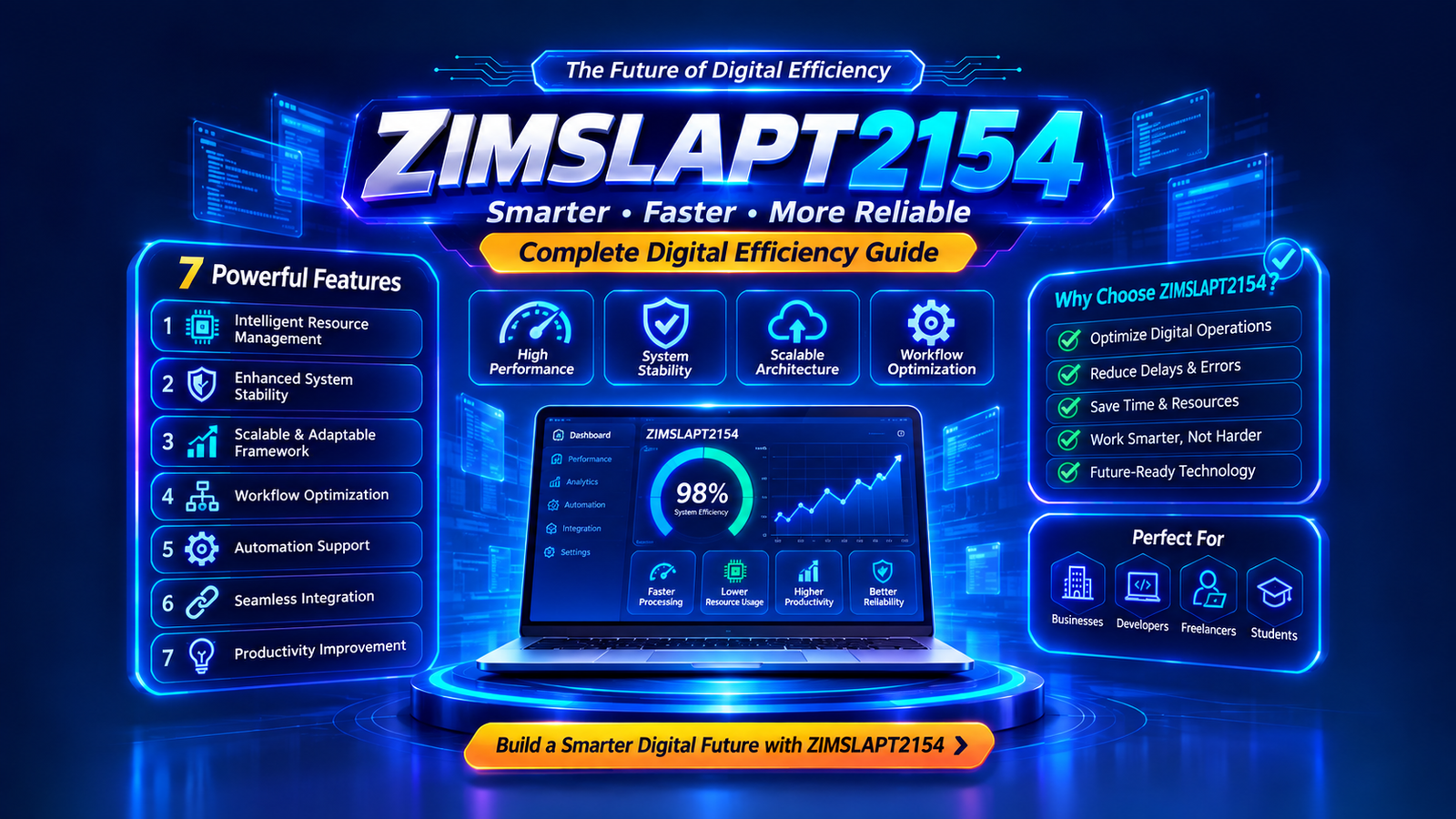
The concept focuses on several areas, including intelligent resource management, system stability, scalable architecture, automation, workflow improvement, and integration with different digital environments. These characteristics make the topic relevant to businesses, remote workers, freelancers, students, and other users who depend on reliable digital systems.
In this guide, we will explore the main features, potential applications, benefits, limitations, and important considerations surrounding Zimslapt2154.
What Is Zimslapt2154?
Zimslapt2154 is described by the source as a contemporary model designed to improve the efficiency and performance of computers and internet-based systems. The source specifically distinguishes it from a single software application, describing it instead as a collection of principles and architectural design concepts.
Its main objective is to simplify digital processes and reduce opportunities for slowdowns and interruptions.
The concept can be associated with several important areas:
- Digital task management
- Intelligent processing
- Resource allocation
- System stability
- Workflow optimization
- Automation
- Scalability
- Digital productivity
This makes the term particularly interesting from a technology and digital efficiency perspective.
7 Powerful Features of Zimslapt2154
1. Intelligent Resource Management
One of the central ideas associated with Zimslapt2154 is intelligent resource management.
Digital systems constantly distribute resources between different processes. When those resources are poorly managed, applications can experience delays, freezes, or slow loading.
The source explains that its digital processing architecture is intended to optimize task management and resource allocation. This approach aims to reduce processing delays and improve the overall flow of digital operations.
Better resource management can help a system prioritize important operations instead of allowing unnecessary processes to consume available capacity.
This concept can be particularly useful in environments where multiple applications and tasks need to operate simultaneously.
Read more: Yiotra89.452n
2. Enhanced System Stability
Performance is not only about speed. A system also needs to remain stable while performing demanding tasks.
The source identifies stability as one of the main pillars of Zimslapt2154. Its approach combines predictable management logic, optimized task scheduling, and cleaner resource distribution.
According to the source, this can contribute to:
- Fewer system freezes
- Reduced technical conflicts
- More consistent performance
- Better responsiveness
- Smoother digital workflows
For organizations, stability can be especially important because interruptions may affect employees, customers, and daily operations.
3. Scalable and Adaptable Architecture
Technology requirements change as organizations grow.
A small business may initially have only a few users and limited data. Over time, it may need to manage more employees, applications, files, customers, and workflows.
The source describes Zimslapt2154 as having a scalable architecture intended to accommodate increasing workloads and changing technology requirements.
Its reported scalability characteristics include:
- Handling increased workloads
- Supporting new software
- Adapting to changing technology
- Maintaining performance as requirements grow
This adaptability can be valuable for organizations that want their digital infrastructure to remain useful over time.
4. Workflow Optimization
Another important aspect of Zimslapt2154 is workflow improvement.
A digital workflow may contain many individual steps. If these steps are inefficient or poorly coordinated, employees can waste time moving between applications or manually completing repetitive tasks.
The source connects the concept with streamlining workflows and improving productivity.
An optimized workflow can help users:
- Complete tasks more efficiently
- Reduce unnecessary manual steps
- Organize digital operations
- Minimize interruptions
- Focus on higher-value work
Workflow optimization is particularly relevant for businesses that depend on multiple interconnected digital tools.
5. Automation Support
Automation is becoming an important part of modern digital operations.
Businesses often automate repetitive activities such as data handling, information processing, notifications, reporting, and routine workflows.
The source identifies automation as one of the digital contexts in which the concepts associated with Zimslapt2154 can be applied.
Automation can reduce repetitive manual work while also creating more consistent processes.
However, automation should be implemented carefully. Poorly designed automated workflows can create new problems rather than solving existing ones.
Read more: Tax Tips
6. Integration With Digital Tools
Modern organizations rarely use just one application.
A typical digital environment may include:
- Communication software
- Customer-management systems
- Accounting platforms
- Cloud storage
- Productivity applications
- Enterprise software
- Data-processing tools
The source describes Zimslapt2154 as supporting integration with multiple applications, platforms, and data streams.
Better integration can reduce friction between different systems and make it easier for information to move through a digital workflow.
The result can be a more connected and organized workspace.
7. Productivity Improvement
Ultimately, digital efficiency should help people accomplish useful work more effectively.
The source states that the approach can improve employee productivity through faster task completion, fewer errors, and smoother collaboration.
When technology becomes more reliable, employees can spend less time dealing with technical interruptions and more time focusing on their actual responsibilities.
This is particularly relevant to organizations where digital systems are essential to everyday operations.
Why Zimslapt2154 Can Be Important for Businesses
Businesses increasingly depend on technology for everyday activities.
A company may rely on digital systems for communication, customer service, inventory, accounting, sales, marketing, and internal operations.
If those systems are slow or unreliable, productivity can suffer.
The source identifies several potential business advantages associated with Zimslapt2154, including reduced operational pressure, improved productivity, integration support, and better resource usage.
A more efficient digital environment can also help organizations make better use of their existing technology instead of constantly replacing hardware or adding unnecessary systems.
Zimslapt2154 for Small Businesses
Small businesses often operate with limited technical resources.
They may not have a large IT department to manage every digital problem.
According to the source, the concepts associated with Zimslapt2154 can help small businesses automate repetitive activities, manage data more effectively, and improve the reliability of important software systems.
Potential areas include:
Automation
Routine operations can be organized into more efficient workflows.
Data Management
Better processing can make information easier to handle.
Software Reliability
Improved stability can reduce unnecessary interruptions.
Business Growth
Scalable systems can help businesses adapt as their requirements increase.
Zimslapt2154 for Large Organizations
Large companies often have complex digital environments.
They may operate numerous interconnected systems, databases, applications, and enterprise platforms.
The source specifically mentions enterprise software such as CRM and ERP systems as examples of environments where reliable digital processes can be important.
In such environments, stability and integration can become major priorities.
A well-organized architecture can help organizations manage complex workflows while reducing unnecessary technical friction.
Zimslapt2154 for Freelancers and Remote Workers
Digital efficiency is not limited to businesses.
Freelancers, students, and remote employees also depend on computers and internet-based systems for their daily work.
Slow applications, interruptions, and inefficient workflows can make it harder to concentrate.
The source suggests that improved processing and operational reliability can support freelancers, students, and remote employees by creating a smoother digital environment.
For these users, the biggest advantage may simply be having technology that stays out of the way while they focus on their work.
Potential Cost Benefits
Technology efficiency can also have financial implications.
The source states that optimizing resource usage can reduce operational pressure and potentially lower costs associated with hardware upgrades, energy consumption, and maintenance.
For organizations, this can be an important consideration.
Instead of focusing only on purchasing more powerful hardware, businesses can also examine whether their existing systems are being used efficiently.
Better resource allocation may allow organizations to get more value from existing infrastructure.
Challenges and Limitations
Although the source presents several positive aspects, it is important to maintain realistic expectations.
Implementation Complexity
Improving a digital architecture may require technical knowledge and careful planning.
Compatibility Issues
Different applications may use different standards and technologies.
Initial Planning
Organizations need to understand their existing infrastructure before making significant changes.
Not Every Problem Is a Performance Problem
Slow systems can result from many causes, including outdated hardware, poor network connectivity, inefficient software, insufficient storage, or configuration problems.
Therefore, a digital efficiency framework should not be treated as a universal solution to every technology problem.
How to Approach Digital Efficiency
If you are interested in the ideas behind Zimslapt2154, a practical digital-efficiency strategy can begin with understanding the existing environment.
Step 1: Identify Slow Processes
Find out which applications or workflows create the biggest delays.
Step 2: Examine Resource Usage
Check whether CPU, memory, storage, or network resources are being used efficiently.
Step 3: Remove Unnecessary Processes
Unused applications and unnecessary background tasks may contribute to inefficiency.
Step 4: Improve Workflow Structure
Look for repetitive activities that could be simplified or automated.
Step 5: Review Integration
Check whether different applications communicate efficiently.
Step 6: Monitor Performance
Track performance over time instead of relying only on occasional observations.
This approach can help organizations make more informed technology decisions.
Future of Digital Efficiency
Digital systems are becoming more interconnected every year.
Cloud computing, automation, artificial intelligence, and data-intensive applications are increasing the amount of processing required by modern organizations.
This makes digital efficiency increasingly important.
The principles described around Zimslapt2154—including intelligent processing, stability, scalability, integration, and workflow optimization—fit into this broader movement toward more efficient digital environments.
Future systems will likely place even greater emphasis on automated resource management and adaptive architectures.
Frequently Asked Questions
What is Zimslapt2154?
Zimslapt2154 is described in the provided source as a contemporary model or collection of architectural principles focused on improving digital efficiency and system performance rather than a single standalone software application.
What are the main features of Zimslapt2154?
The main concepts discussed in the source include intelligent resource management, enhanced system stability, scalable architecture, workflow optimization, automation, integration, and productivity improvement.
Can Zimslapt2154 help businesses?
The source presents the concept as useful for businesses by improving resource efficiency, reducing operational pressure, supporting productivity, and helping different digital tools work together.
Is Zimslapt2154 a software application?
According to the provided source, it is not presented as one single software application. It is described as a collection of principles and architectural design concepts.
Who can benefit from digital-efficiency concepts?
Businesses, freelancers, students, remote employees, and organizations managing complex digital systems may find digital-efficiency principles relevant to their workflows.
Final Thoughts
Zimslapt2154 presents an interesting concept centered on digital efficiency, system stability, resource management, workflow optimization, scalability, and integration.
The provided source describes it not as a conventional standalone application but as a model involving architectural and operational principles designed to make digital systems more efficient and reliable.
Its key ideas are especially relevant in an environment where businesses and individuals increasingly depend on technology for everyday work.
For small businesses, these principles can support automation and better resource usage. For larger organizations, they can help address complex digital environments and integration requirements. Freelancers, students, and remote workers may also benefit from smoother and more reliable digital workflows.
At the same time, digital efficiency requires more than a single concept. Hardware, software, networking, security, configuration, and workflow design all influence performance.
Overall, the ideas associated with Zimslapt2154 highlight an important lesson: improving digital performance is not always about simply making systems faster. Stability, intelligent resource management, adaptability, and efficient workflows are equally important for creating a reliable digital environment.
