
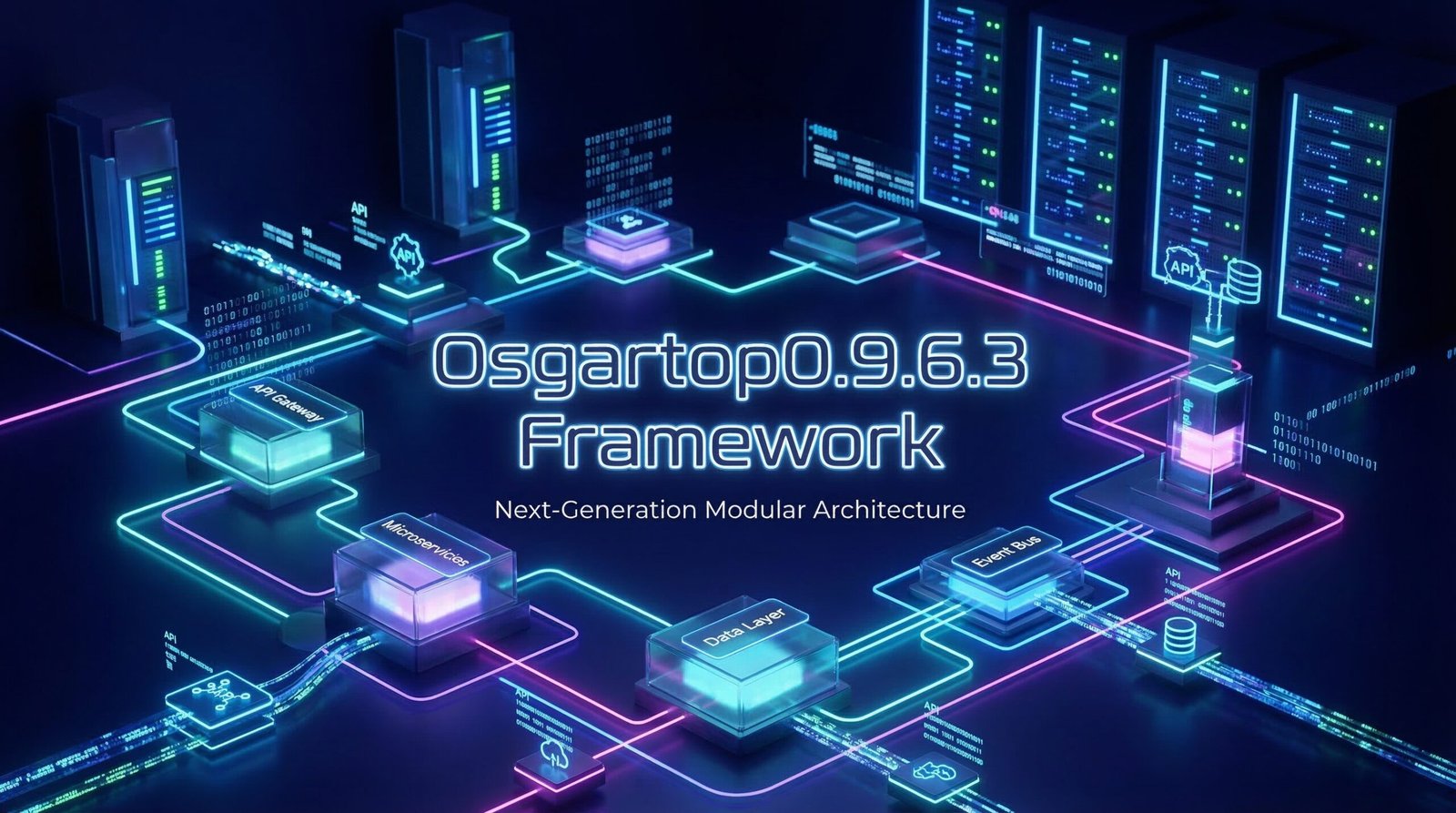
In the ever-expanding world of software engineering, structured frameworks and version identifiers play a vital role in organizing and managing complex systems. One such term that has been gaining attention is osgartop0.9.6.3. While it may initially appear as a random string, it actually represents a carefully structured backend framework version designed to enhance performance, scalability, and system efficiency.
As modern applications continue to evolve, the need for optimized backend tools has become increasingly important. Osgartop0.9.6.3 fits into this landscape as a framework that emphasizes modular design, lightweight execution, and reliable system behavior. Understanding its role requires examining its architecture, development philosophy, and real-world relevance.
The Evolution of Backend Systems and Frameworks
Backend systems have undergone significant transformation over the years. In the early days of computing, backend processes were often rigid and monolithic, making them difficult to scale or modify. As technology advanced, developers began shifting toward more flexible and modular approaches.
This evolution led to the creation of frameworks that prioritize efficiency and adaptability. Osgartop0.9.6.3 appears to be a product of this shift, reflecting modern design principles that focus on reducing complexity while maintaining high performance. By embracing modularity and lightweight architecture, it aligns with the needs of contemporary software development.
Understanding the Structure of Osgartop0.9.6.3
The version identifier osgartop0.9.6.3 is more than just a label; it provides insight into the framework’s development stage and capabilities. Each part of the version number has a specific meaning that helps developers understand its maturity.
The initial zero indicates that the framework is still in a development phase, suggesting ongoing improvements and refinements. However, the relatively high minor and patch numbers indicate that it has already undergone substantial testing and enhancement. This combination suggests a system that is stable enough for practical use while still evolving.
Design Philosophy and Core Objectives
The design philosophy behind osgartop0.9.6.3 revolves around simplicity, efficiency, and scalability. Developers today require tools that can handle complex tasks without introducing unnecessary overhead. This framework aims to meet those needs by providing a streamlined environment for backend operations.
Its core objectives include improving system performance, reducing resource consumption, and enabling seamless integration with other tools. By focusing on these goals, osgartop0.9.6.3 provides a foundation for building reliable and efficient applications.
Modular Architecture and Flexibility
One of the most important aspects of osgartop0.9.6.3 is its modular architecture. This design allows developers to select only the components they need, reducing system overhead and improving performance.
The flexibility offered by this approach is significant. Developers can customize the framework to suit their specific requirements, enabling them to build systems that are both efficient and adaptable. This modularity also simplifies maintenance, as individual components can be updated or replaced without affecting the entire system.
Lightweight Framework and Resource Management
In modern computing environments, efficiency is critical. Osgartop0.9.6.3 addresses this by adopting a lightweight design that minimizes resource usage. This ensures that the framework can operate effectively even in environments with limited processing power or memory.
Efficient resource management is particularly important in cloud-based systems and edge computing environments. By reducing unnecessary overhead, the framework helps improve performance and lower operational costs.
Performance Optimization Strategies
Performance optimization is a central focus of osgartop0.9.6.3. The framework incorporates advanced techniques to ensure that systems remain responsive and efficient under varying workloads.
These strategies include optimizing execution pipelines, improving memory allocation, and reducing latency in data processing. By streamlining these processes, the framework ensures that applications can handle high levels of demand without compromising performance.
This makes it particularly valuable for applications that require consistent and reliable performance, such as enterprise systems and real-time data processing platforms.
Enhancing Stability and Reliability
Reliability is a key requirement for any backend framework, and osgartop0.9.6.3 places a strong emphasis on stability. As the framework evolves, developers focus on reducing errors and ensuring consistent behavior across different scenarios.
Improved error-handling mechanisms allow the system to manage unexpected issues more effectively, while enhanced logging capabilities provide valuable insights into system performance. These features help developers identify and resolve problems quickly, ensuring that applications remain stable and reliable.
Compatibility and Integration Capabilities
In today’s interconnected digital ecosystem, compatibility is essential. Osgartop0.9.6.3 is designed to integrate seamlessly with a wide range of systems, including different operating systems, hardware configurations, and third-party tools.
This compatibility simplifies the deployment process and reduces the risk of integration issues. By supporting a variety of environments, the framework ensures that developers can use it in diverse applications without significant modifications.
Security and Data Protection Measures
Security is a critical consideration in backend development, and osgartop0.9.6.3 includes features designed to protect systems from vulnerabilities. These measures include enhanced authentication protocols, strict access controls, and mechanisms for maintaining data integrity.
By prioritizing security, the framework helps organizations safeguard sensitive information and comply with regulatory requirements. This makes it suitable for applications that require a high level of data protection.
Workflow Automation and Process Efficiency
Automation is a key component of modern backend systems, and osgartop0.9.6.3 provides tools for managing workflows and processes efficiently. By automating routine tasks, the framework reduces the need for manual intervention and improves overall productivity.
This capability is particularly valuable in environments where consistency and reliability are essential. Automated workflows ensure that tasks are completed accurately and on time, reducing the risk of errors and improving efficiency.
Real-World Applications and Industry Use
Osgartop0.9.6.3 can be applied in a wide range of industries and use cases. In software development, it supports the creation of APIs and backend services. In enterprise environments, it facilitates system monitoring and workflow management.
Its versatility also makes it suitable for educational purposes, where it can be used to teach concepts related to backend architecture and system design. By providing a practical example of modern framework design, it helps learners understand the principles of efficient software development.
User Experience and Developer Accessibility
As frameworks evolve, usability becomes increasingly important. Osgartop0.9.6.3 includes features designed to improve the user experience, such as simplified workflows and intuitive interfaces.
These enhancements make it easier for developers to adopt the framework and use it effectively. By reducing complexity, the framework helps developers focus on building applications rather than managing technical details.
Monitoring, Logging, and Diagnostics
Effective monitoring and diagnostics are essential for maintaining system performance. Osgartop0.9.6.3 provides advanced tools for tracking system behavior and identifying potential issues.
Detailed logging capabilities allow developers to analyze system performance and detect anomalies, while diagnostic tools help pinpoint the root cause of problems. These features contribute to a more stable and reliable system.
Scalability and Long-Term Growth
Scalability is a key consideration for modern applications, and osgartop0.9.6.3 is designed to support growth. Its modular architecture allows systems to expand easily, accommodating increased workloads and new features.
This scalability ensures that the framework can adapt to changing requirements and support long-term development. By providing a flexible and scalable solution, it helps organizations plan for future growth.
Best Practices for Implementation
Successful implementation of osgartop0.9.6.3 requires careful planning and adherence to best practices. Developers should begin by understanding the framework’s documentation and testing configurations in controlled environments.
Regular monitoring and maintenance are essential for ensuring long-term stability. By keeping the system updated and addressing issues proactively, organizations can maximize the benefits of the framework.
Common Challenges and Troubleshooting
Despite its advantages, osgartop0.9.6.3 may present challenges in certain situations. Common issues include configuration errors, compatibility conflicts, and performance bottlenecks.
Addressing these challenges requires a systematic approach, including analyzing logs, verifying configurations, and optimizing system settings. By following structured troubleshooting processes, developers can resolve issues efficiently.
Ethical Considerations and Responsible Use
The use of backend frameworks comes with ethical responsibilities. Developers must ensure that systems are used in a way that protects user privacy and complies with regulations.
Responsible use of osgartop0.9.6.3 involves maintaining data integrity, implementing security measures, and avoiding misuse of automation capabilities. By adhering to ethical standards, organizations can build trust and ensure long-term success.
Future Developments and Innovation
As technology continues to evolve, frameworks like osgartop0.9.6.3 are expected to incorporate new features and capabilities. These may include enhanced automation, improved integration with distributed systems, and advanced security measures.
Ongoing development and community contributions will play a key role in shaping the future of the framework. By adapting to emerging trends, it can continue to meet the needs of modern software development.
Conclusion
Osgartop0.9.6.3 represents a modern approach to backend framework design, combining efficiency, flexibility, and performance. Its modular architecture and lightweight design make it a valuable tool for developers seeking to build scalable and reliable systems.
By understanding its features and capabilities, organizations can leverage the framework to improve their digital infrastructure and support future growth. As the demands of software development continue to evolve, frameworks like osgartop0.9.6.3 will remain essential in shaping the future of technology.
YOU MAY READ:
Apkek.org in 2025: App Reviews, Online Earning Guides & Latest Tech Trends Explained
FAQs About What Is Osgartop0.9.6.3
What is osgartop0.9.6.3 in simple terms?
Osgartop0.9.6.3 is a backend framework version designed to improve system performance, automate workflows, and manage server-side operations efficiently.
Why is osgartop0.9.6.3 important in modern software development?
It is important because it helps developers build scalable, efficient, and stable systems while reducing complexity in backend processes.
What type of framework is osgartop0.9.6.3?
It is considered a lightweight, modular backend framework or system utility used for managing APIs, automation, and digital workflows.
Is osgartop0.9.6.3 fully released or still in development?
Based on its version number, it is still in a pre-release or near-stable stage, meaning it is actively being improved and optimized.
How does osgartop0.9.6.3 improve performance?
It improves performance through better memory management, faster execution processes, and optimized resource usage.
Can osgartop0.9.6.3 be integrated with other systems?
Yes, it is designed to be compatible with multiple platforms and can integrate with existing tools and software environments.
What industries can use osgartop0.9.6.3?
It can be used in software development, enterprise systems, IT operations, cloud computing, and educational environments.
Does osgartop0.9.6.3 support automation?
Yes, it includes features for workflow automation, task scheduling, and process management to reduce manual work.
Is osgartop0.9.6.3 scalable?
Yes, its modular design allows it to scale easily as system requirements grow or change over time.
What challenges can occur when using osgartop0.9.6.3?
Common challenges include configuration errors, compatibility issues, and performance tuning, which can be resolved through proper setup and monitoring.
