
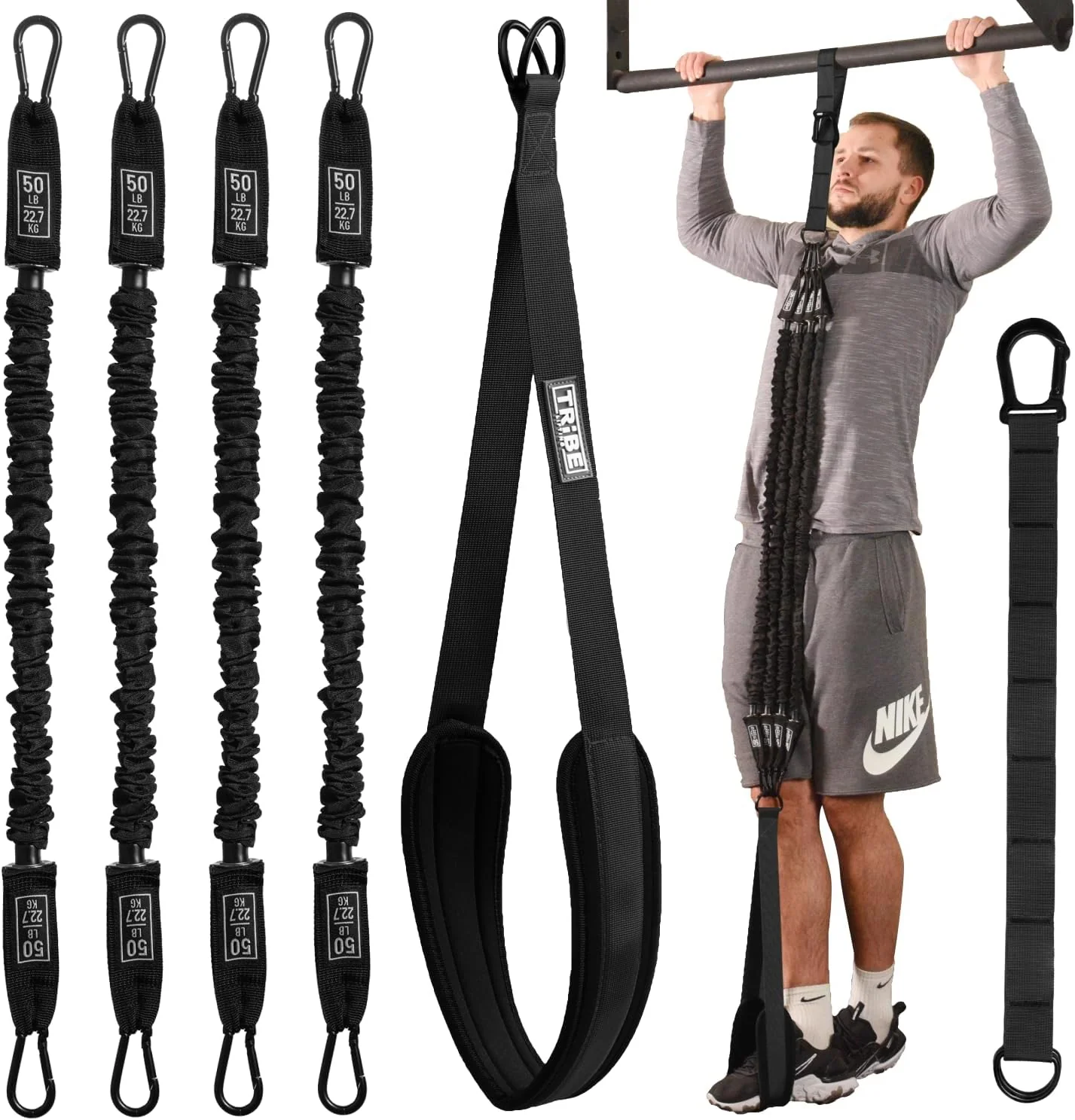
Choosing the right pull-up band can make all the difference in your training. Whether you’re a complete beginner or progressing toward unassisted pull-ups, selecting the proper pull-up resistance bands helps you train effectively, safely, and confidently. With so many options available, knowing what to look for can save you time and frustration. In this guide, we’ll walk through how to choose the right pull-up assist band based on your current fitness level and goals.
Understand What Pull-Up Assist Bands Do
Before picking a band, it’s important to know how these tools work. Pull-up assist bands are elastic bands that provide upward support when you perform a pull-up. When you attach the band to a pull-up bar and place your knee or foot inside its loop, it stretches and helps lift part of your body weight. This makes the pull-up movement easier at the bottom, where most people struggle the most.
The amount of help you get depends on the band’s thickness: thicker bands offer more assistance, while thinner bands offer less. As you pull yourself up and the band shortens, the resistance changes — a concept called pull up resist — meaning the band supports you more where it’s needed and less where you’re stronger.
Assess Your Current Strength Level
Your current upper-body strength plays a big role in selecting the right band. Here’s a general way to assess yourself:
-
Beginner: You can’t complete a single unassisted pull-up and struggle to control your body when hanging from the bar.
-
Intermediate: You can do 1–3 pull-ups but tire quickly or break form.
-
Advanced: You can do multiple pull-ups with good form and want to improve endurance or reps.
Your level will help determine how much assistance you need.
Choose Bands Based on Assistance Level
Pull-up resistance bands typically come in a range of resistances. They are often color-coded, with heavier bands providing more support. Here’s how to choose:
-
Heavy Bands (High Assistance): Best for beginners. These provide strong support and make it possible to complete reps with good form. If your goal is to build confidence and basic pulling strength, start here.
-
Medium Bands (Moderate Assistance): Great for intermediate users. These bands still help, but less than heavy ones, allowing you to take on more of your own body weight.
-
Light Bands (Low Assistance): Suited for advanced users who need minimal help. These help with higher volume training or when transitioning toward full unassisted pull-ups.
It’s often useful to have a set of bands so you can adjust as your strength improves.
Check Band Material and Durability
Not all bands are created equal. Look for bands made from high-quality latex or rubber. Good bands should feel strong, with consistent resistance throughout. Thin or cheap bands can snap suddenly or tear over time, which can be dangerous during workouts. Durability matters, especially if you plan to use them frequently.
Consider Your Training Environment
Where you’ll be using your bands also matters. If you train at home or travel often, choose a versatile set of pull-up resistance bands that are easy to pack and can be used with different bars or anchor points. If you mostly train in a gym with an assisted pull-up machine available, you might use bands less often but still keep them for warm-ups or technique practice.
Test and Track Your Progress
Once you’ve chosen a band, test it out. Do a few assisted pull-ups and see how it feels. You want a band that allows you to complete clean reps but still challenges your muscles. As you get stronger, switch to lighter bands with less assistance — that’s the essence of pull up resist progression.
Conclusion
Selecting the right pull-up assist band doesn’t have to be confusing. By evaluating your strength level, understanding band resistance, and choosing quality materials, you can find the perfect band to support your journey toward stronger pull-ups. Remember, the right pull-up resistance bands grow with you — keep progressing, keep adjusting, and enjoy the gains!
